Guide No. I · Goodwood, West Sussex
Goodwood Festival of Speed
The hillclimb that became the world's great moving motor show. Here is how to make sense of four days, several paddocks and a very long walk up a very famous hill.
- Hillclimb
- Supercars
- Midsummer
Why it matters
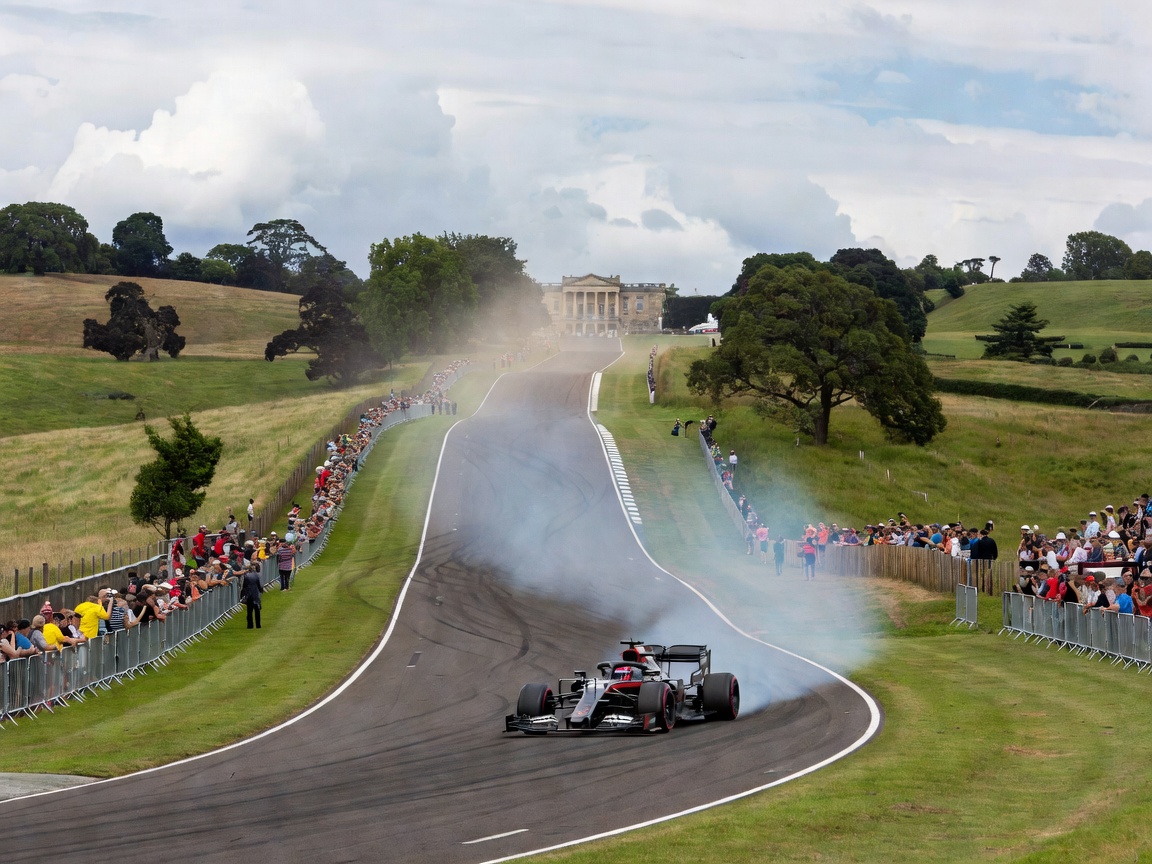
The Goodwood Festival of Speed is the event most British enthusiasts circle first. Founded in 1993 by the then Lord March — now the Duke of Richmond — it turned the private drive of Goodwood House near Chichester into a hillclimb of roughly 1.16 miles and invited manufacturers, racing teams and private collectors to run up it. More than three decades later, it remains one of very few places where a pre-war Grand Prix car, a modern Formula 1 machine and a road-legal hypercar can share the same stretch of tarmac in a single afternoon.
Unlike a race meeting, the Festival is not really about who wins. The point is proximity. Paddocks are open, cars are parked close enough to study the stitching, and drivers move freely among visitors. For supercar fans it is the closest thing Britain has to a live, walk-through motor show — only louder, and with the cars actually being driven.
What happens across the weekend
The Festival runs over four days in midsummer, and seasoned visitors plan around several distinct zones rather than simply parking themselves by the hill.
- The Hillclimb. Cars run individually past the house, alongside the famous flint wall and up into the woods. Grandstands and trackside banks line the lower sections.
- The Forest Rally Stage. A gravel course near the top of the estate where rally cars from several eras are driven with real commitment. It is a long walk, but rewarding.
- The supercar displays. The newest road cars are shown in a dedicated paddock and many are driven up the hill — often the first time the public sees them moving.
- The central feature. Each year a large sculpture is built in front of Goodwood House to celebrate a chosen manufacturer. It is the Festival's signature photograph.
- Manufacturer stands and the lawn. Static displays, product launches and a curated concours of significant road cars fill the areas around the house.
Choosing your day
Programmes vary from year to year, so treat the following as a general pattern and confirm the 2026 schedule on the official site.
| Day | Character | Best for | Watch out for |
|---|---|---|---|
| Thursday | Opening day, historically lighter crowds | Photography and relaxed paddock browsing | A less complete running programme |
| Friday | Full programme under way | A balance of action and space | Strong demand for tickets |
| Saturday | Peak atmosphere | First-timers and social groups | Heavy crowds and busy roads |
| Sunday | Final day, traditionally with a timed shootout | Competitive spectacle | The slowest exit traffic of the weekend |
Tickets and access
Goodwood sells admission by the day, with grandstand seats along the hill sold as a separate add-on and hospitality packages at the premium end. Members of the Goodwood Road Racing Club receive priority booking and member facilities, which can make sense if you plan to attend more than one Goodwood event in a season. We do not quote prices here because they change each year and vary by day; the official website at goodwood.com is the only reliable source. The Festival has sold out in advance in recent years, so early booking is sensible.
The estate sits just north of Chichester. On peak days the A27 and A286 fill quickly, so either arrive very early or accept a later start. Chichester railway station is the nearest mainline stop, and shuttle services have typically operated during the event — confirm arrangements for 2026 before travelling.
Pros and cons
In its favour
- Unmatched breadth, from pre-war racers to current hypercars
- Open paddocks with genuinely close access
- Cars are driven, not just displayed
- International line-up of manufacturers and teams
Worth knowing
- Crowds can be intense on peak days
- Costs rise quickly with grandstands and hospitality
- Long walking distances on sloping ground
- Significant road traffic at arrival and departure
How it compares
Next to the Goodwood Revival, the Festival is modern, loud and brand-heavy — manufacturers treat it as a launch platform. Against London Concours or the Concours of Elegance, it is far less formal and much busier. If you can attend only one event in 2026 and your priority is seeing supercars at speed, this is the one to choose.
Practical tips
- Bring ear defenders for children; some cars are extremely loud at close range.
- Wear broken-in walking shoes — the estate is large and hilly.
- Plan one zone per morning and one per afternoon rather than crossing the site repeatedly.
- Pack for both sun and rain; there is limited shade on the banks.
- Check the official programme the evening before, as running orders can change.